Table of Contents
- Understanding Off-Grid Living Requirements in Costa Rica
- Eco-Friendly Vacation Rentals Costa Rica: What Makes Them Truly Sustainable
- Best Areas for Remote Stays in Costa Rica
- Seasonal Off-Grid Challenges: Rainy Season vs Dry Season
- Off-Grid Transport Logistics and Remote Access
- Vacation Rental Management Costa Rica: What Remote Owners Need to Know
- Conclusion
- Frequently Asked Questions
Last Updated: September 15, 2026
Understanding Off-Grid Living Requirements in Costa Rica
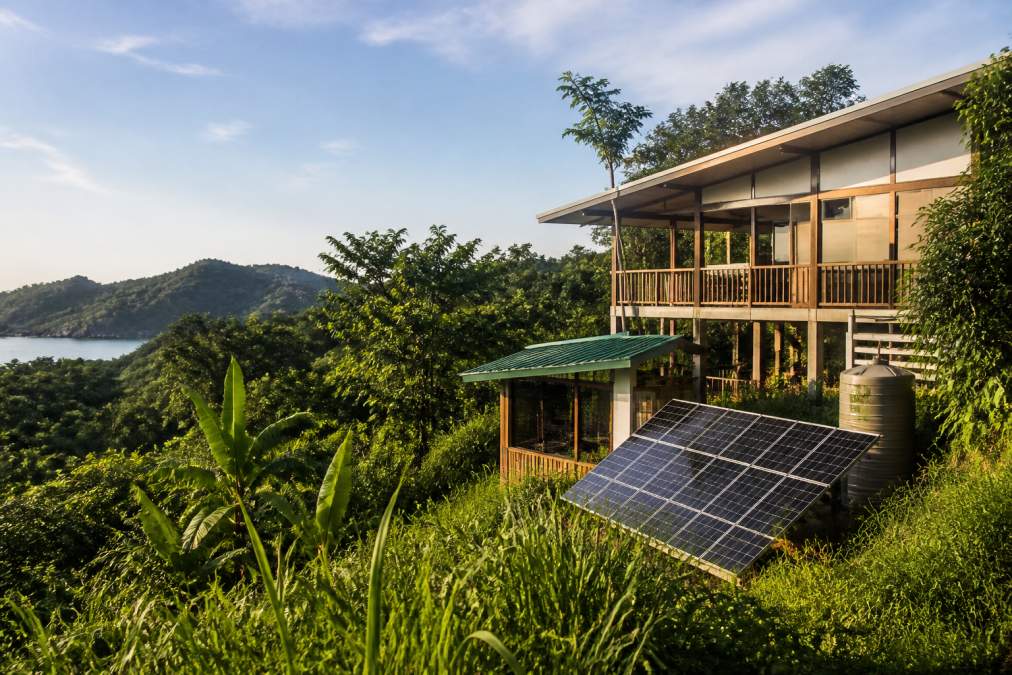
Costa Rica off-grid vacation rental guide planning starts with one question: what does the property actually need to function without a municipal grid? Off-grid living in Costa Rica means the home generates its own power, captures and treats its own water, and manages waste without connection to public utilities. For guests, that translates to a stay that feels remote and self-sufficient rather than stripped down.
Most properties in coastal Guanacaste and the Arenal region rely on two systems working in tandem: solar power and rainwater harvesting. When either system is undersized, guests notice within hours. When both are sized correctly, most visitors never think about infrastructure at all, which is exactly the point.
Solar Power and Renewable Energy Systems
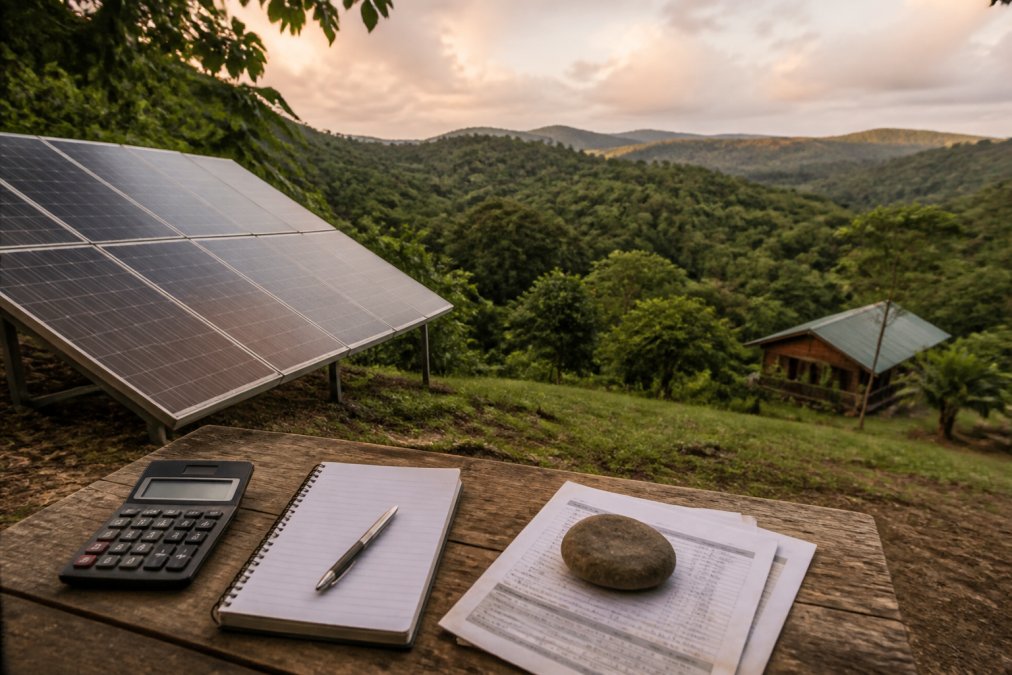
A typical off-grid solar setup pairs photovoltaic panels with a battery bank and an inverter, and sizing depends on daily consumption rather than square footage. Air conditioning is the single largest draw, so many owners install high-efficiency inverter units or skip AC entirely in favor of cross-ventilation and ceiling fans. A common mistake is sizing the battery bank for average use instead of peak use, which means the system fails on the third cloudy day of a rainy-season stretch. Owners who track guest consumption patterns tend to size systems more accurately than those who guess.
Rainwater Harvesting and Water Filtration
Rainwater harvesting collects runoff from the roof into cisterns, then pushes it through sediment and carbon filtration before it reaches a tap. Potable use usually requires an additional UV stage or a separate drinking-water supply, since filtration alone does not guarantee safety. The thing nobody tells you about rainwater systems is that the first flush of any storm carries roof debris, so a diverter valve matters more than the tank size. Guests who understand this treat the water normally; guests who don't often assume the worst.
Eco-Friendly Vacation Rentals Costa Rica: What Makes Them Truly Sustainable
Eco-friendly vacation rentals Costa Rica travelers book are not defined by bamboo furniture or a "green" label on a listing. Genuine sustainability comes down to measurable systems: renewable energy generation, water reuse, waste separation, and a carbon footprint the property can actually document. The problem is that "eco" and "off-grid" are marketing terms with no legal definition in Costa Rica, so any property can use them. The only reliable way to tell the difference is to verify the systems yourself before you book.
How to Verify an Off-Grid Claim Before You Book
Start with the certification question. Costa Rica's Certification for Sustainable Tourism (CST), administered by the Instituto Costarricense de Turismo, is the country's official sustainability rating and awards properties a number of "leaves" based on audited criteria (Sustainability - Visit Costa Rica). A CST rating is not the same as off-grid status, but it is a verified signal that a property has been inspected rather than self-labeled. If a host claims eco status but cannot name a certification body, treat the claim as unverified.
Next, ask for the system specs in writing. A genuinely off-grid property can answer four questions without hesitation:
- What is the solar array size in kilowatts, and what is the battery bank capacity in kilowatt-hours?
- How many days of autonomy does the battery bank provide during cloudy weather?
- What is the cistern or tank capacity in liters, and how many filtration stages does the water pass through?
- Is there a backup generator, and if so, what fuel does it use?
A host who deflects or answers only in adjectives is usually grid-tied with a green marketing label. A host who answers in numbers runs a property that has been engineered, not decorated.
The Greenwashing Signals to Watch For
A few patterns reliably separate real off-grid rentals from green-washed ones. Listings that emphasize "eco-friendly amenities" like reusable straws or organic soap but never mention power or water are almost always grid-connected. Properties that advertise air conditioning, hot tubs, and unlimited hot water in a remote location are usually drawing from the grid or running a generator far more than the listing admits. And any listing that uses "off-grid" and "backup generator" together without explaining how often the generator runs is telling you the solar system is undersized.
The clearest signal is energy independence. A property that runs entirely on solar with battery backup, treats its own water, and composts or recycles waste is doing more than one that simply avoids plastic straws. Sustainable tourism in Costa Rica has matured enough that eco-conscious guests now ask specific questions about where power and water come from. Owners who can answer those questions directly convert more bookings and earn better reviews.
Best Areas for Remote Stays in Costa Rica
The best areas for remote stays in Costa Rica balance seclusion with practical access, and the off-grid calculus changes dramatically by region. What matters is not just scenery but elevation, rainfall pattern, sun exposure, and how the final road behaves in the wet season. Three regions dominate for off-grid properties, and each demands a different system design.
Guanacaste and the Nicoya Peninsula
Guanacaste's dry season runs roughly December through April, which makes solar generation predictable and roads passable. The terrain ranges from flat coastal plains to rugged hillsides, and properties on higher ground often catch better sun and breeze while avoiding the coastal humidity that corrodes equipment. Tamarindo and Potrero anchor the northern coast, while the southern Nicoya Peninsula around Santa Teresa and Montezuma feels more secluded and receives noticeably more rain than the northern beaches.
For off-grid purposes, the northern Guanacaste coast is the easiest region to operate: high sun hours, low rainfall, and a longer dry season mean smaller battery banks and simpler water systems. The trade-off is water scarcity. Wells and cisterns can run low by March, so properties here need larger storage capacity than the rainfall pattern alone would suggest. Remote access usually requires a 4x4 during the wetter months, since unpaved roads deteriorate quickly after heavy rain, and some hillside driveways are impassable in a standard rental car even in dry conditions.
La Fortuna and the Arenal Region
La Fortuna sits in a tropical climate with frequent rain, so solar systems need larger battery reserves and water capture is rarely a problem. The trade-off is cloud cover, which reduces panel output on many days, and the Arenal region's reputation for rain is well earned. Properties here lean on biodiversity and volcano views rather than beach access, and the lush surroundings mean humidity control becomes a real design consideration. Dehumidifiers and proper ventilation matter more here than air conditioning, and both draw power.
Off-grid properties in the Arenal area typically need 30 to 50 percent more battery capacity than comparable Guanacaste properties to ride through consecutive cloudy days (pubmed.ncbi.nlm.nih.gov). The upside is that water is abundant, and a well-designed rainwater system rarely faces scarcity. Guests who book La Fortuna expect rainforest, not sunshine, and the best properties set that expectation clearly.
The Southern Zone and Osa Peninsula
The Southern Zone around Uvita and Ojochal, and the Osa Peninsula further south, offer the most remote off-grid experience in the country. Rainfall is heavy, biodiversity is exceptional, and access is the hardest of the three regions.
Matching the Region to Your Trip
Seasonal Off-Grid Challenges: Rainy Season vs Dry Season
| Season | Main Challenge | Practical Fix | Guest Impact |
|---|---|---|---|
| Rainy season | Reduced solar output, muddy roads | Larger battery bank, 4x4 transport | Plan for slower arrivals |
| Dry season | Water scarcity, high heat | Backup water storage, shade systems | Higher AC and water use |
| Transition months | Unpredictable weather | Flexible check-in logistics | Mixed expectations |
Off-Grid Transport Logistics and Remote Access
Vacation Rental Management Costa Rica: What Remote Owners Need to Know
Conclusion
Frequently Asked Questions
What should I look for when booking an off-grid vacation rental in Costa Rica?
Check the power source (solar panels with battery backup), water supply (rainwater harvesting or well), and connectivity (satellite or cellular signal strength). Confirm whether the property has a backup generator for cloudy days. Ask about road access, since many off-grid properties require a 4x4 vehicle, especially during the rainy season. Verify that the rental has clear emergency contacts and a management team available if something fails.
Are off-grid vacation rentals in Costa Rica safe?
Yes, when the property is professionally managed. Off-grid rentals in Guanacaste and La Fortuna typically have solar power, water filtration, and waste management systems that meet safety standards. The main risks are remote access and seasonal road conditions, not the off-grid systems themselves. Managed eco-lodging properties provide 24/7 support, clear check-in instructions, and maintenance response, which local vacation rental management teams handle for remote owners.
How do I prepare for an off-grid vacation in Guanacaste?
Pack a headlamp, portable power bank, and refillable water bottle. Download offline maps before you arrive, since GPS can be unreliable on rugged terrain. Rent a 4x4 vehicle if your rental is in a secluded area. Bring cash for local markets and tips. Confirm arrival time with the property manager so someone can guide you through the final stretch of remote access roads.
Is it better to stay in a managed luxury rental or a remote off-grid cabin?
It depends on your priorities. A managed luxury rental offers reliable solar power, water filtration, and on-call support, which suits families or remote workers. A remote off-grid cabin delivers seclusion and a smaller carbon footprint but requires more self-sufficiency. For owners, professional vacation rental management in Costa Rica ensures both types of properties stay bookable, maintained, and profitable year-round.