
Table of Contents
- Why Standard Booking Advice Fails for Boutique Stays
- Define Your Travel Style Before You Search
- Match Regions to Micro-Climates and Travel Logistics
- Boutique Hotel vs Private Villa Costa Rica: Which Fits?
- How to Choose a Luxury Rental in Potrero or Tamarindo
- Direct Booking vs. Third-Party Platforms: The Price and Policy Gap
- Verify Connectivity, Amenities, and Cancellation Policies
- When Luxury Vacation Rental Management Costa Rica Makes Sense
- Frequently Asked Questions
Last Updated: September 9, 2026
Why Standard Booking Advice Fails for Boutique Stays
Generic travel advice assumes you are booking a 200-room resort with a front desk that never sleeps. Boutique accommodation in Costa Rica operates differently, and the standard playbook of "book early, compare prices, read reviews" breaks down when you are dealing with a six-unit eco-lodge or a privately managed villa. The stakes are higher because the properties are smaller, and the margin for miscommunication is thinner.
At Marquis Stays Property Management, we manage high-end coastal homes across Potrero, Tamarindo, La Fortuna, and Guanacaste, and we see the fallout from mismatched booking expectations constantly. A guest arrives expecting daily housekeeping at a remote glamping site, or books a "luxury villa" that turns out to be a fifteen-minute drive down a rutted dirt road. The core problem is that boutique booking requires verifying operational details that large platforms simply do not surface. This guide focuses on the questions that actually determine whether your trip works: logistics, connectivity, cancellation terms, and who is really managing the property on the ground.
Define Your Travel Style Before You Search
Your travel style dictates every subsequent decision, from the region you select to the accommodation type you book. Boutique booking fails when travelers skip this step and default to filtering by price or photos. Start by answering three questions honestly: do you want total seclusion or walkable access to restaurants, are you traveling with children who need structured activities, and how much driving are you willing to do each day?
These answers narrow your options dramatically. An independent traveler comfortable with a 4x4 can access remote eco-lodges that reward the effort with empty beaches. A family with young children needs proximity to medical care and paved roads, which points toward Tamarindo or Potrero rather than the Osa Peninsula. Travelers who prefer guided experiences over self-navigation should prioritize properties with on-site concierge services, which is a core feature of professionally managed rentals. The most common mistake is choosing a stunning property in a location that conflicts with your actual travel behavior, then blaming the accommodation when the logistics sour the trip.
Match Regions to Micro-Climates and Travel Logistics
Costa Rica's micro-climates are not a minor detail; they dictate whether your beach vacation happens in sunshine or daily downpours. The Pacific coast around Guanacaste, including Potrero and Tamarindo, has a pronounced dry season from December through April, while the Caribbean side and parts of the southern zone stay wetter year-round. Booking a "green season" getaway to the northern Pacific is very different from doing the same in the southern zone, where rain is more persistent.
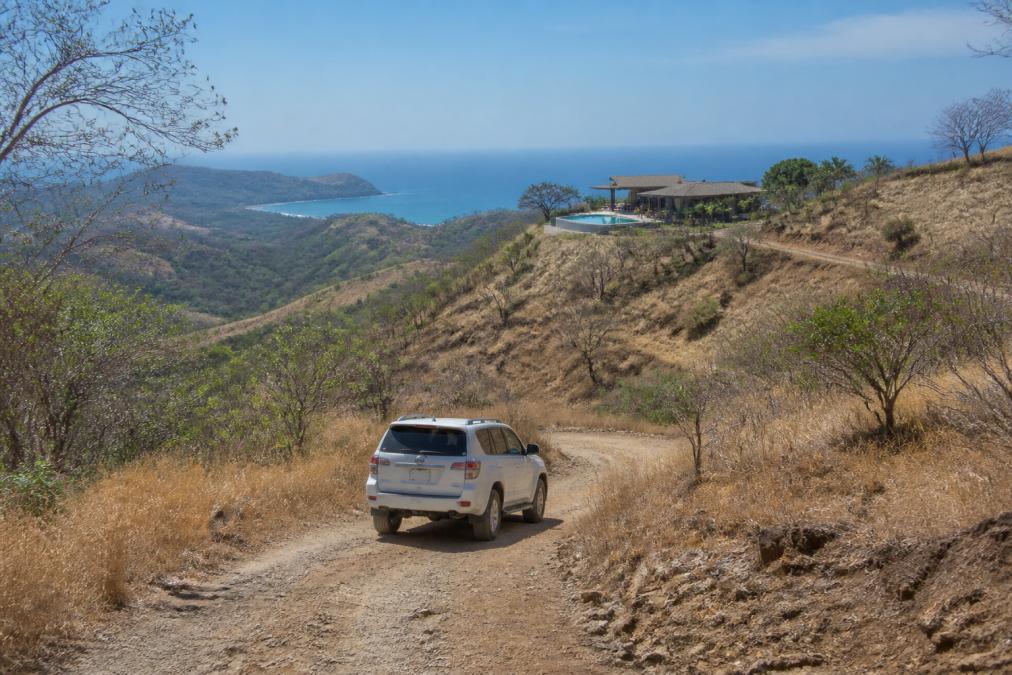
Transport logistics carry equal weight. Many boutique properties, particularly eco-lodges and hillside villas, require a 4x4 vehicle for the final stretch of road. Rental car agencies in Costa Rica often restrict where you can drive, and some roads are impassable during the wet season without high clearance. The official Costa Rica Tourism Board guidance recommends checking road conditions and access requirements before booking remote accommodations. Before you commit to a property, map the drive from the nearest international airport, which is Daniel Oduber Quirós International Airport in Liberia for the Guanacaste region, and confirm whether the property provides transfer services or detailed directions.
Boutique Hotel vs Private Villa Costa Rica: Which Fits?
The choice between a boutique hotel and a private villa comes down to the level of service you expect versus the privacy you want. A boutique hotel offers a front desk, on-site restaurant, and staff who can arrange tours and handle issues immediately. A private villa gives you space, a private pool, and full control over your schedule, but it only functions well if a professional management team is handling maintenance, housekeeping, and guest communication behind the scenes.
| Consideration | Boutique Hotel | Private Villa |
|---|---|---|
| Service availability | On-site staff, daily housekeeping | Scheduled housekeeping, remote management |
| Privacy | Shared common areas | Fully private, gated property |
| Dining | On-site restaurant or meal plans | Self-catering or private chef booking |
| Best for | Couples, short stays, social travelers | Families, groups, longer stays |
For the luxury rental market in Potrero and Tamarindo, the villa route typically wins for families or groups of six or more, where the cost per night across multiple bedrooms beats booking several hotel rooms. The trade-off is that you are relying on the property manager's responsiveness rather than a front desk. This is why verifying who manages the villa, and whether they are local and reachable, is as important as the property itself. A villa with a responsive local manager delivers a better experience than a hotel with indifferent staff.
Eco-Lodges and Glamping: What You Sacrifice and Gain
Eco-lodges and glamping sites offer immersion that a villa or hotel cannot replicate, but they demand flexibility. You gain proximity to rainforest and wildlife, often inside private reserves, but you typically sacrifice reliable high-speed internet, air conditioning, and sometimes hot water. These properties are best suited to travelers who treat the accommodation as part of the adventure rather than a retreat from it. For a boutique booking in this category, ask about the power source, water heating method, and the distance to the nearest town for supplies or medical needs.
How to Choose a Luxury Rental in Potrero or Tamarindo
Choosing a luxury rental in Potrero or Tamarindo requires verifying that the property's amenities match the reality of its location. Potrero is quieter, with a laid-back beach town feel and proximity to Flamingo and Conchal. Tamarindo is busier, with more restaurants, nightlife, and tourist infrastructure. Both fall within Guanacaste's dry forest region, but Tamarindo's central location means more traffic and noise during high season.
When evaluating a listing, look beyond the photo gallery and confirm specifics: is the pool heated, which can matter during the cooler green season months, and is the air conditioning in all bedrooms or just the main living area? Ask about the property's access road and whether it is paved or requires a 4x4. Check the number of bathrooms against your group size, as many older villas have a ratio that does not match modern expectations. A property listed as "ocean view" can mean a glimpse from the rooftop rather than a panoramic vista from the main terrace. Property photos can be misleading, so request a video walkthrough or recent guest photos before you commit.
Direct Booking vs. Third-Party Platforms: The Price and Policy Gap
Booking directly with the property owner or manager almost always yields a better price and more flexible terms than using a third-party platform. Platforms charge commissions that owners build into their rates, and they impose rigid cancellation policies that do not account for the nuances of a small property. When you book direct, you negotiate directly with the person who has the authority to adjust terms. cutting travel costs.
For boutique properties, the gap is even wider. A platform's automated system cannot handle a request to shift dates due to a flight change, nor can it communicate the specific quirks of accessing a remote villa. Direct booking gives you access to the manager's local knowledge, which often translates into better recommendations for tours, restaurants, and logistics. The World Tourism Organization's sustainable tourism guidelines emphasize that direct engagement with local operators supports community-based tourism and often provides travelers with more authentic experiences.
Negotiation Tactics That Work for Smaller Properties
Smaller properties have flexibility that large resorts lack, but you must ask the right way. For a direct booking, inquire about multi-night discounts, off-season rates, or included airport transfers. Owners of boutique properties are more willing to negotiate on add-ons like a private chef dinner or a day tour than on the nightly rate itself. Always ask for a written confirmation that itemizes the rate, taxes, and any included services.
Verify Connectivity, Amenities, and Cancellation Policies
Connectivity is the silent dealbreaker for many travelers, especially those who need to work remotely or stay in touch with family. "Wi-Fi available" on a listing can mean a weak signal that only works near the main office. For a villa or eco-lodge, ask for specific upload and download speeds, and confirm whether the connection is fiber optic, cable, or satellite. In remote areas of Guanacaste, cellular data can be unreliable, so a property with a backup Starlink connection is a significant advantage.
Cancellation policies for boutique properties are often stricter than hotel chains because a small owner loses a larger share of income when a booking falls through. Read the policy before you pay a deposit, and clarify what happens if a hurricane or national emergency forces you to cancel. The [Costa Rica(/blog/vacasa-alternative-luxury-costa-rica-homes)'s national emergency commission guidance | cne.go.cr] provides official information on weather alerts and emergency protocols that can affect travel plans. A professional management company will offer a clear, written policy that balances the owner's need for income security with reasonable guest protections.
When Luxury Vacation Rental Management Costa Rica Makes Sense
The final consideration is who manages the property you book, and this matters most for private villas in Potrero, Tamarindo, and the surrounding Guanacaste coast. A professionally managed property operates to hospitality standards: coordinated housekeeping, vetted maintenance contractors, and a manager who responds to guest issues promptly. An owner-managed property can be excellent, but it depends entirely on the owner's availability and standards.
Luxury vacation rental management Costa Rica services, like those provided by our team at Marquis Stays Property Management, exist to bridge the gap between remote owners and guest expectations. We handle guest communication, check-ins, housekeeping, and maintenance so that the property operates like a five-star hotel even when the owner is abroad. For guests, this means a smoother experience: issues get resolved quickly, the property is maintained to a high standard, and the manager has local knowledge to enhance your stay. For owners, professional management protects the asset and maximizes rental revenue through data-driven pricing and an emphasis on converting one-time guests into direct-booking repeat clients.
The difference between a memorable boutique stay and a disappointing one rarely comes down to the photos. It comes down to logistics, honest communication, and professional management. When you book a property that is professionally managed to hospitality standards, you get the benefit of local expertise without the risk of an absentee owner. That is the standard we hold at Marquis Stays Property Management, and it is the standard you should expect from any boutique property you consider.
Booking a boutique property in Costa Rica rewards travelers who do their homework on logistics, connectivity, and management structures. The trade-offs between a hotel, a villa, or an eco-lodge are real, and matching them to your travel style determines whether the trip delivers. If you are considering a luxury rental in Potrero, Tamarindo, La Fortuna, or Guanacaste, a professional management team ensures the property meets five-star hospitality standards before you arrive. Get started with Marquis Stays Property Management and book with confidence, knowing that guest communication, housekeeping, and maintenance are handled by a local team dedicated to your experience.
Frequently Asked Questions
How far in advance should I book boutique stays in Guanacaste?
For high season (December through April), book boutique properties in Potrero, Tamarindo, or La Fortuna at least 4 to 6 months ahead. Smaller properties hold fewer rooms, so popular dates sell out faster than at large resorts. For green season (May to November), you can often book 4 to 6 weeks out and still find availability. Booking early also gives you room to negotiate a better rate or a flexible cancellation policy directly with the owner.
Is it better to book directly or through a third-party site for boutique stays?
Direct booking usually wins for boutique properties. Owners save on platform commissions, so they often pass those savings to you through lower rates or added value like airport transfers or a welcome dinner. You also get clearer communication about property specifics, like road access or connectivity. Third-party sites offer payment protection, but they rarely provide the property-level detail you need for remote Costa Rica locations. Always compare the total cost including fees before deciding.
What amenities should I look for in a Costa Rican boutique property?
Prioritize practical amenities over decorative ones. Confirm reliable high-speed internet if you plan to work, and ask about backup power for green season storms. Check if the property includes a 4x4 vehicle recommendation, as many remote villas require one. For families, verify family-sized rooms or connecting units. For adults-only trips, confirm the property enforces an adults-only policy. Ask about on-site staff response times for maintenance issues, especially at private villas.
What is the difference between an eco-lodge and a luxury villa in Costa Rica?
An eco-lodge focuses on immersion in nature with minimal environmental impact. Expect shared or semi-private spaces, simpler amenities, and a fixed meal schedule. A luxury villa offers full privacy, a dedicated staff, a private pool, and a fully equipped kitchen. Your choice depends on your travel style: eco-lodges suit travelers who prioritize guided nature experiences, while villas suit independent travelers wanting space and flexibility, especially families or groups.