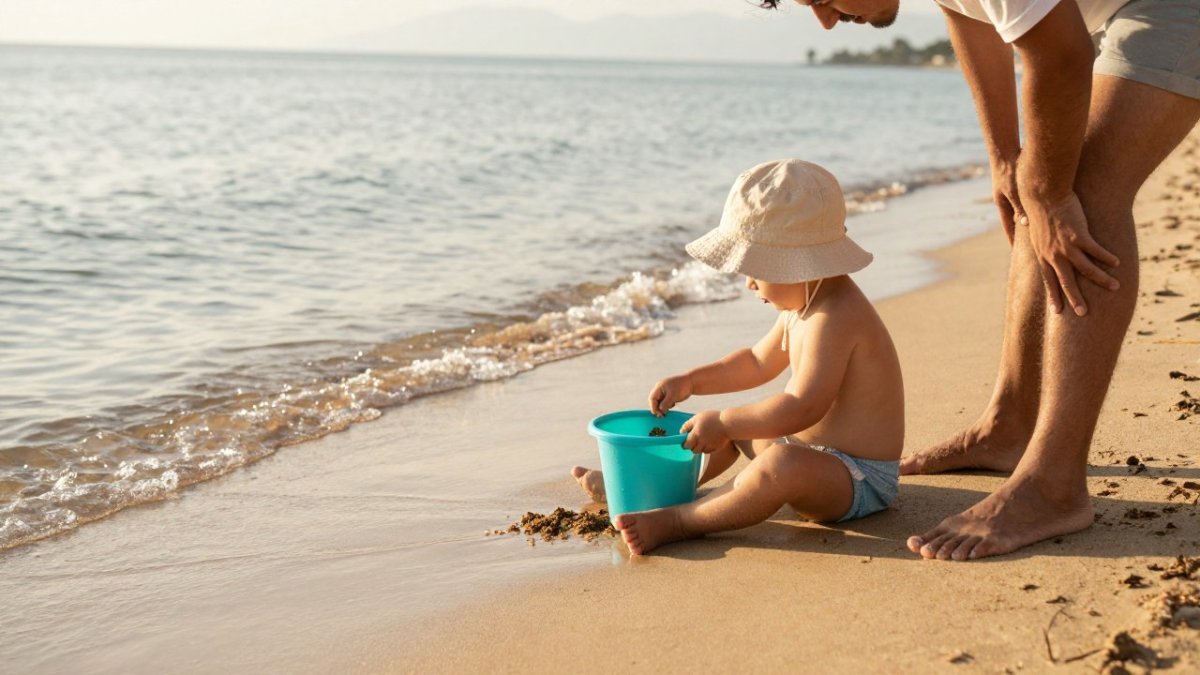
Last Updated: November 16, 2026
Quick Summary
Choose safe swimming beaches for toddlers in Costa Rica by checking for shallow, calm water, a gentle sand slope, and help close by. Sheltered bays like Playa Sámara and Playa Carrillo usually have gentler waves, but check conditions each morning and keep your toddler within arm's reach.
- Judge every shoreline by water depth, wave strength, and sand slope before unpacking.
- Ask your host or a local operator about rip currents at the specific beach you plan to visit.
- The calmest window is often early morning at low to mid tide, with chop building in the afternoon.
- Set a depth limit of chest-deep on the toddler and turn back at that line every time.
- Lifeguard coverage varies and some beaches have none, so designate one adult as water watcher.
Table of Contents
- What Makes a Beach Safe for Toddlers
- Best Beaches in Costa Rica for Families
- Calm Beaches in Costa Rica for Swimming
- Toddler Beach Safety Tips
- What to Pack for a Beach Day with a Toddler
- Accessibility and Timing: Strollers, Seasons, and Crowds
- Book a Family-Friendly Stay with Marquis Stays
- Frequently Asked Questions
What Makes a Beach Safe for Toddlers
A beach is safe for toddlers when the water stays shallow and calm, the sand slopes gently, and help is close by if something goes wrong, the same traits that define safe swimming beaches. Those three conditions matter more than any beach's reputation. At Marquis Stays Property Management, we advise families renting along the coast to judge every shoreline by the same criteria before unpacking a single towel.
Safe swimming beaches share a set of physical traits you can check in minutes. Water depth at the shoreline should stay below a toddler's chest for several metres out. Waves should break softly rather than crash. Sand should be firm underfoot, not steep.
Water Conditions and Wave Strength
Wave strength decides most of the risk. A beach with gentle, low waves gives a toddler room to splash while an adult stands within arm's reach. Strong waves knock small children off balance and pull sand from under their feet.
Watch for rip currents, narrow channels of water flowing away from shore. They are hard to spot from the sand and dangerous for adults, let alone toddlers. Ask a local operator or check with your accommodation host about known current patterns before choosing a spot.
Access, Facilities, and Shade
Practical comfort keeps a beach day manageable. Look for short walks from parking, restrooms nearby, and natural shade from trees or a rented umbrella. Beach access that requires a long hike or steep stairs is a poor fit for strollers and tired toddlers.
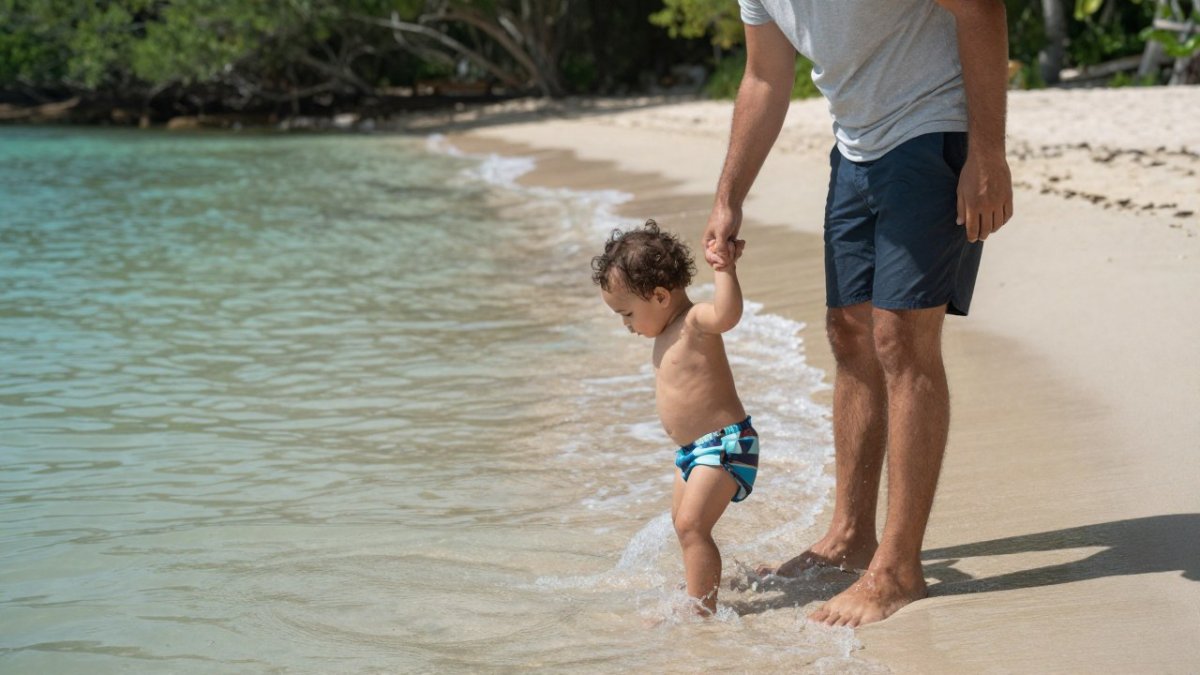
Best Beaches in Costa Rica for Families
The best family beaches combine calm water with easy access and basic facilities. But "family-friendly" is not the same as "toddler-safe," so compare each option against the same four criteria: typical wave exposure, entry slope and sand firmness, walking distance from parking, and whether shade, toilets, and help are close at hand.
Playa Sámara sits inside a sheltered bay, so the swell is usually muted. The bay is popular, so the shallows can fill with swimmers and kayaks during the day. Watch out: kayak and boat traffic near the shoreline can be as much of a hazard as the waves, so pick a spot away from rental launch points.
Playa Carrillo is a long, wide crescent. Check current conditions before you go, and bring your own water, snacks, and shade.
Playa Conchal is known for its shell sand. Watch out: shell sand can be sharp on bare knees, so water shoes and a mat are worth packing.
Playa Hermosa in Guanacaste is a beach that conditions can change throughout the day, so check current conditions before you go.
For parents comparing quieter options, our guide to the best hidden beaches in Costa Rica for families covers calm-water spots with amenities and practical tips.
| Beach | Typical water | Entry and sand | Facilities and access | Toddler notes |
|---|---|---|---|---|
| Playa Sámara | Calm bay, gentle waves | Gradual slope, firm near waterline | Restaurants, restrooms, town walkable | Boat and kayak traffic near shore; busy by mid-morning |
| Playa Carrillo | Gentle, long shoreline | Wide, firm sand; short to moderate walk from parking | Limited, bring supplies | Space and quiet; few facilities |
| Playa Conchal | Clear, often calm | Coarse shell sand; entry can be steep | Basic; short walk from road or resort area | Hot, sharp sand, water shoes advised |
| Playa Hermosa (Guanacaste) | Generally gentle | Moderate slope | Restrooms, parking | Afternoon wind can build chop |
Treat the table as a starting point, not a guarantee. Conditions at every one of these beaches change with the tide, the season, and the day's weather, and none of them is supervised everywhere at all times.
Calm Beaches in Costa Rica for Swimming
Calm beaches in Costa Rica for swimming tend to sit inside sheltered bays where headlands block ocean swell.
Conditions change with the season and the tide. A beach that looks glassy at low tide can turn choppy by afternoon. Treat every calm-water report as a starting point, not a guarantee.
Families heading to less-developed shorelines should read our parent's playbook for remote beaches with kids before committing to a quieter stretch of coast.
Toddler Beach Safety Tips
Supervision is the one control that never fails. Keep a toddler within arm's reach in or near water, even at a calm beach, and never rely on another child to watch them. Toddler beach safety tips start with that single rule, but they do not end there. A beach described as calm is not automatically safe for a toddler: calm water can still be chest-deep a few steps out, a gentle shorebreak can still knock a small child down, and a sheltered bay can still have a channel of moving water.
Checking Conditions Before You Go
Check the surf each morning before you leave, and check it again at the beach. Look at wave height, the interval between waves, tide timing, and whether the water looks murky or churned. A common pattern is that the calmest window is early morning at low to mid tide, with wind and chop building through the afternoon. Ask your host or a local operator about currents at the specific beach you plan to visit, and walk the shoreline before you settle, look for darker channels, foam lines moving sideways, and gaps in the breaking waves.
Watch out: a beach that looks glassy at low tide can turn choppy within a couple of hours as the tide fills in, so re-check the water after every break rather than assuming the morning's conditions will hold.
Lifeguards and Emergency Readiness
Lifeguard coverage varies, and some beaches have none. Do not assume a beach is supervised because it is popular. Before you unpack, note where the nearest access point is, identify a landmark near your spot, and keep a charged phone in a dry bag. Know the emergency number before you arrive and note the nearest clinic or hospital to your beach for the day. If there is no lifeguard, the practical plan is simple: one adult is the designated water watcher at all times, and that role does not rotate mid-swim.
Reading the Water with a Toddler
Set a depth limit before you enter, chest-deep on the toddler, not on the adult, and turn back at that line every time. Face the water, not the sand, and position yourself between the child and the open sea. Watch for the shorebreak rather than the offshore waves: it is the small wave that breaks right at the sand that most often knocks toddlers down. If the water pulls at your ankles strongly, it will pull harder at a toddler's legs.
For a deeper safety walkthrough covering currents and precautions, read our essential beach safety tips for parents.
What to Pack for a Beach Day with a Toddler
Packing well removes half the stress. What to pack for a beach day with a toddler comes down to sun protection, hydration, and a reliable way to keep your child close.
- Rash guard and wide-brim hat
- Reef-safe sunscreen, reapplied every two hours
- Swim diaper and two spare outfits
- Large water bottle and snacks
- Pop-up shade tent or umbrella
- Dry bag for phone and keys
- Float vest sized for your toddler
Accessibility and Timing: Strollers, Seasons, and Crowds
Timing changes the experience more than most guides admit. Arrive early in the morning for cooler sand, softer light, and far fewer people. Popular beaches can get crowded, and crowds make it harder to keep eyes on a fast toddler.
Stroller access depends on the beach. Firm, packed sand near the entrance is easier for strollers than loose dry sand or steep paths.
Book a Family-Friendly Stay with Marquis Stays
Choosing the right beach starts with choosing the right base. A villa close to calm water, with space for naps and gear, changes how much of the day you actually spend relaxed.
Marquis Stays Property Management manages luxury vacation rentals in Potrero, Tamarindo, La Fortuna, and across Guanacaste. Our team handles guest communication, check-ins, housekeeping, and maintenance for the properties we manage.
If you are planning the trip, our step-by-step guide to planning a luxury family vacation walks through timing, bookings, and what to arrange before you arrive. You can also see where we manage luxury vacation rentals to find a property near the beaches you have shortlisted.
The difference between a stressful beach day and an easy one usually comes down to preparation and the right location. Marquis Stays Property Management pairs five-star hospitality with data-driven management, so families arrive to a property that is ready and owners get clear visibility into how it performs. Get started with Marquis Stays Property Management and book a stay near calm, family-friendly water.
Frequently Asked Questions
Which beaches in Costa Rica are best for swimming with toddlers?
Beaches with calm, shallow water and easy access work best. Always check current surf reports and watch for rip currents before entering the water, and keep close supervision even at calm beaches.
Are there calm beaches in Costa Rica for swimming with young children?
Yes, several beaches have calmer waters, especially in protected bays or during the dry season. Conditions change with tides and weather, so confirm with local sources or your accommodation host before you go. Never assume a beach is safe just because it looks calm.
What should parents check before taking a toddler swimming at a beach?
Check the surf forecast, tide schedule, and any posted warnings. Look for rip currents, which appear as darker, calmer channels between waves. Confirm whether lifeguards are present and note the nearest emergency contact. Bring a fully charged phone and stay within arm's reach of your toddler at all times. If conditions look rough, choose a pool or shallow river instead.
Do Costa Rica beaches have lifeguards?
Lifeguard coverage varies. Lifeguard coverage varies from beach to beach. Check with local authorities or your accommodation before swimming. If no lifeguard is present, be extra cautious and avoid swimming alone. Always supervise toddlers closely and keep them in shallow water.