
Table of Contents
- Why Occupancy Rate Matters for Your Vacation Rental Revenue
- Vacation Rental Dynamic Pricing Strategies That Drive Bookings
- Professional Photography and Listing Optimization
- Luxury Rental Guest Retention Strategies for Repeat Bookings
- Off-Season Vacation Rental Marketing to Fill Weekday Gaps
- Multi-Channel Distribution and Calendar Management
- Review Management and Local SEO for Vacation Rentals
- Conclusion
- Frequently Asked Questions
Last Updated: August 31, 2026
Why Occupancy Rate Matters for Your Vacation Rental Revenue
Your occupancy rate is the single most important metric determining whether your vacation rental investment generates wealth or sits idle. When a property sits empty, you're losing money every day, not just the nightly rate, but fixed costs that accumulate regardless of bookings.
A luxury coastal home in Costa Rica costs money to maintain, insure, and staff whether guests are staying there or not. If your occupancy rate drops from 75% to 60%, you're not losing 15% of revenue while expenses stay flat, that's the difference between a thriving investment and one that barely breaks even.
At Marquis Stays Property Management, we manage luxury vacation rental properties across Potrero, Tamarindo, La Fortuna, and Guanacaste. The properties that consistently outperform others treat occupancy rate not as a vanity metric but as the central lever controlling profitability. When you increase vacation rental occupancy, revenue per property improves, your ability to weather seasonal downturns strengthens, and your return on investment rises.
This guide walks you through specific strategies that drive occupancy higher, approaches that have moved the needle for properties just like yours.
Vacation Rental Dynamic Pricing Strategies That Drive Bookings
Dynamic pricing matches your rate to market demand in real time, maximizing revenue per available night while staying competitive enough to fill your calendar.
Most vacation rental owners set a base rate and adjust seasonally. That's a start, but it misses opportunities to capture demand spikes and adjust for booking velocity.
Setting Your Base ADR and Seasonal Adjustments
Your base ADR (average daily rate) is the foundation. Research comparable properties in your exact market, not just any beachfront home, but homes with similar size, amenities, and location within your specific region. A four-bedroom luxury home with ocean views in Tamarindo commands a different ADR than the same property in La Fortuna.
Use that data to establish your baseline, then adjust for your property's specific strengths. A private pool justifies a premium. Proximity to restaurants and nightlife is another factor.
Seasonal adjustments matter because traveler intent changes throughout the year. December through February sees peak demand from North American and European travelers. July and August bring family vacations. May, September, and November are traditionally slower. Your base ADR should reflect your peak season rate, with clear reductions during off-season periods to maintain occupancy.
Using Market Demand Data to Adjust Rates in Real Time
Real-time rate adjustment means monitoring booking velocity, how quickly your calendar is filling, and adjusting your nightly rate accordingly. If you're 60 days out and 40% booked, drop your rate slightly to drive bookings. If you're 85% booked, raise your rate because demand is strong.
Many property management platforms offer built-in dynamic pricing tools that automate this process. Instead of manually adjusting rates weekly, the system does it based on rules you set. This consistency, adjusting rates based on actual demand patterns rather than guessing, moves the needle on occupancy.
Professional Photography and Listing Optimization
Your listing photos are the first impression potential guests have of your property and the primary reason they either click through or scroll past. Professional photography isn't a luxury, it's a conversion tool.
High-quality images showcasing your property's best features, lighting, and amenities drive higher click-through rates from search results. That means more inquiries, more booking opportunities, and ultimately higher occupancy. Professional images are shot in ideal lighting conditions, often at golden hour, and edited to enhance appeal without misrepresenting the space.
Beyond photography, your listing copy matters. Write about the experience, not just features. Instead of "4 bedrooms, 3 bathrooms," write "Sleeps 8 guests in four spacious suites, each with private ensuite bathrooms and ocean-facing balconies."
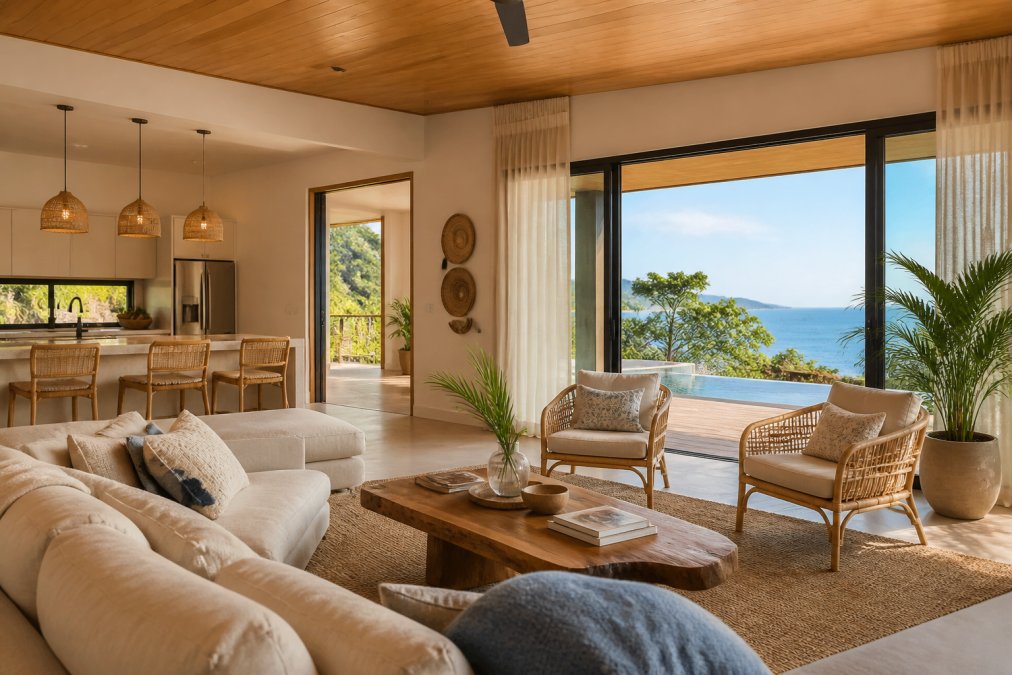
Optimize your listing for search visibility by including location keywords naturally. Mention nearby attractions, neighborhood character, and what makes your specific area unique. If your property is in Tamarindo, mention proximity to the beach, restaurants, and local experiences. This helps potential guests discover your listing when searching for their ideal destination.
Luxury Rental Guest Retention Strategies for Repeat Bookings
One-time guests are valuable. Repeat guests are gold. A guest who books twice is likely to book again and again. This is where direct booking becomes your highest-margin revenue stream.
The difference between a repeat guest and a one-time guest often comes down to experience. When guests feel genuinely cared for, smooth check-in, fast responses, honored special requests, hassle-free checkout, they remember that and return. speeding up unit turns.
Direct Booking Systems and Instant Book Features
Direct bookings bypass platform commissions that eat into your revenue. On most platforms, you're paying 15-20% in fees (airbnb.com). Direct bookings cost nothing except the effort to deliver an exceptional experience.
Instant Book features, where guests can book immediately without host approval, reduce friction in the booking process. Properties with Instant Book enabled typically have higher occupancy because they capture bookings that might otherwise go to competitors (airbnb.com).
Your direct booking system should be simple and mobile-friendly. A clean, fast checkout process with multiple payment options (credit card, PayPal, bank transfer) removes barriers to booking.
Guest Communication and Experience Excellence
Response time is a conversion metric. A guest inquiry that gets a response within one hour is more likely to convert to a booking than one that gets a response eight hours later (peer-reviewed research).
Every guest interaction, from initial inquiry to post-checkout follow-up, shapes whether they'll book again or recommend your property. A guest who asks about early check-in and gets a warm, accommodating response feels valued. A guest who encounters a problem during their stay and watches it get resolved quickly develops trust.

When a guest asks if they can bring their dog, the response isn't just "yes" or "no", it's "Absolutely, we'd love to meet your dog. Here's information about nearby parks and a local vet in case you need anything."
This approach to guest communication directly impacts repeat bookings and referrals. Guests who feel genuinely welcomed are more likely to return and leave positive reviews, which improves your search visibility and attracts more bookings from new guests.
Off-Season Vacation Rental Marketing to Fill Weekday Gaps
Peak season is easy. The challenge is filling occupancy during off-season periods and weekday gaps when demand naturally drops.
Off-season marketing isn't about desperate discounting, it's about targeting the right guests at the right time with the right offer. A couple looking for a romantic getaway in September isn't price-sensitive; they're flexible on timing. A family planning a reunion in May might book your property if they know about it.
Weekday gaps are different. Even during peak season, Monday through Thursday often see lower occupancy than weekends. Targeting business travelers, digital nomads, or couples seeking a midweek escape can fill these gaps. Offer a weekday rate that's lower than weekend rates but still profitable.
Direct email to past guests is your most effective off-season channel. A guest who stayed in December might book again in June if you send a targeted offer: "We're offering 20% off for stays June 15-30. Bring your family back." This costs almost nothing and converts at rates far exceeding other marketing channels.
Multi-Channel Distribution and Calendar Management
Your property needs visibility on multiple platforms: Airbnb, VRBO, Booking.com, and direct channels each reach different guest segments. A guest searching on VRBO might never search on Airbnb.
The challenge is managing your calendar across all platforms to avoid double-booking. Channel managers solve this by syncing your calendar across all platforms in real time. When a guest books on one platform, your availability updates everywhere else within minutes.
A unified inbox where all guest messages from all platforms appear in one place ensures consistent, fast response times regardless of where the guest booked. You respond once, and the message goes to the guest through their original booking channel.
Review Management and Local SEO for Vacation Rentals
Your reviews are a ranking factor on every booking platform. Properties with more reviews and higher ratings get better search placement, driving more visibility, inquiries, and occupancy.
Actively encourage guests to leave reviews with a simple post-checkout email: "We'd love to hear about your stay. Here's a link to leave a review." Include a direct link to make it easy.
Respond to every review, positive or negative. A thoughtful response to positive reviews shows future guests you're engaged and professional. A respectful, solution-focused response to negative reviews demonstrates that you care about guest satisfaction.
Local SEO for vacation rentals means optimizing visibility for location-based searches. When someone searches "luxury vacation rental Tamarindo," you want your property to appear. This happens through consistent location mentions in your listing, reviews that mention your location, and your property appearing on local travel guides and directories.
Conclusion
Increasing your vacation rental occupancy isn't about one magic tactic. It's about systematically addressing every factor influencing whether a guest books your property or chooses a competitor: professional photography, dynamic pricing, guest communication that builds loyalty, multi-channel distribution, and review management.
When these elements work together, occupancy rises. Revenue rises with it. Your investment becomes what it should be: a profitable asset generating consistent returns.
At Marquis Stays Property Management, we manage luxury vacation rentals across Costa Rica's premier destinations, Potrero, Tamarindo, La Fortuna, and Guanacaste. Our approach combines five-star hospitality with data-driven revenue optimization. We handle every operational detail while implementing strategies to maximize your occupancy and direct booking revenue.
If your property is underperforming or you're managing it remotely and need professional oversight, List My Property with Marquis Stays and let our team turn your investment into a consistently profitable asset.
Frequently Asked Questions
Q: What is a good occupancy rate for a luxury vacation rental in Costa Rica?
A: Target occupancy rates for luxury coastal properties in Costa Rica typically range from 65-75% annually. High-performing properties in prime locations like Tamarindo and Potrero often exceed 75%. Occupancy above 80% is exceptional and typically requires premium pricing, professional management, and strategic positioning. Your specific target depends on seasonal patterns, local market demand, and whether you prioritize maximizing bookings or maintaining premium rates during peak seasons.
Q: How does dynamic pricing affect occupancy rates for coastal properties?
A: Dynamic pricing adjusts your nightly rate based on market demand, seasonality, and booking patterns. During high-demand periods, raising rates captures premium revenue from guests willing to pay more. During low-demand windows (weekdays, off-season), reducing rates strategically fills gaps that would otherwise remain vacant. This approach increases overall occupancy while optimizing revenue per available night. Properties using data-driven dynamic pricing can see improvements in total revenue compared to fixed-rate strategies.
Q: What role does high-end photography play in increasing booking conversion?
A: Professional photography is a primary factor influencing booking decisions for luxury rentals. High-quality images showcasing your property's best features, amenities, views, and unique characteristics increase conversion rates by making guests confident in their choice. Poor photography can lead to lower inquiry rates and higher cancellations. For luxury coastal properties in Costa Rica, professional photography should highlight ocean views, outdoor spaces, and premium finishes that justify higher nightly rates and attract discerning travelers.
Q: How can I convert one-time guests into repeat bookings?
A: Luxury rental guest retention strategies include exceptional communication before, during, and after stay; personalized welcome amenities; prompt maintenance response; and follow-up outreach encouraging return visits. Direct booking systems allow you to build relationships outside platform algorithms. Offering loyalty incentives, remembering guest preferences, and delivering five-star hospitality consistently transforms transactional bookings into repeat customers. Properties with strong retention can see a significant portion of revenue from returning guests, reducing dependency on new customer acquisition.
Q: What are the best strategies for filling weekday gaps and off-season periods?
A: Off-season vacation rental marketing combines reduced pricing during slow periods, targeted promotions to past guests, partnerships with corporate travel programs, and flexible cancellation policies. Weekday gaps can be filled by offering discounts for multi-night stays or targeting remote workers seeking short-term rentals. Local SEO optimization helps capture searches from nearby travelers. Seasonal trends in your region dictate timing, in Costa Rica's Guanacaste, green season (May-November) requires more aggressive promotion than peak winter months.
Q: How does professional property management improve occupancy compared to self-management?
A: Professional management handles guest communication, listing optimization, dynamic pricing, calendar coordination across platforms, and reputation management, all of which directly impact occupancy. Experienced teams understand local market demand, seasonal trends, and pricing strategies that self-managing owners often miss. They maintain consistent five-star guest experiences, leading to higher review scores and repeat bookings. For remote owners in particular, professional management eliminates the operational burden while typically increasing occupancy and revenue enough to offset management fees.
Q: Should I focus on direct bookings or platform bookings to increase occupancy?
A: A balanced multi-channel strategy maximizes occupancy. Platform listings (Airbnb, Vrbo, Booking.com) provide consistent discovery and booking volume. Direct bookings eliminate commission fees and build guest relationships for repeat business. The most successful luxury properties use platforms to attract guests, then encourage direct bookings for future stays through excellent service and communication. Over time, direct bookings can represent a significant portion of revenue as your reputation and guest list grow, improving overall profitability.
This article was written using GrandRanker