Table of Contents
- Luxury Villa vs Condo Investment in Costa Rica: Quick Comparison
- Costa Rica Vacation Rental Management ROI: Villas vs Condos
- Cost of Maintaining a Luxury Villa in Costa Rica vs Condo Fees
- Best Areas for Vacation Rental Investment in Costa Rica
- Legal Structures: Fee Simple vs Condo Regime in Costa Rica
- Exit Strategy and Resale Value: Villa vs Condo
- How to Choose: Decision Framework for Your Investment
- Frequently Asked Questions
Last Updated: September 16, 2026
Luxury Villa vs Condo Investment in Costa Rica: Quick Comparison
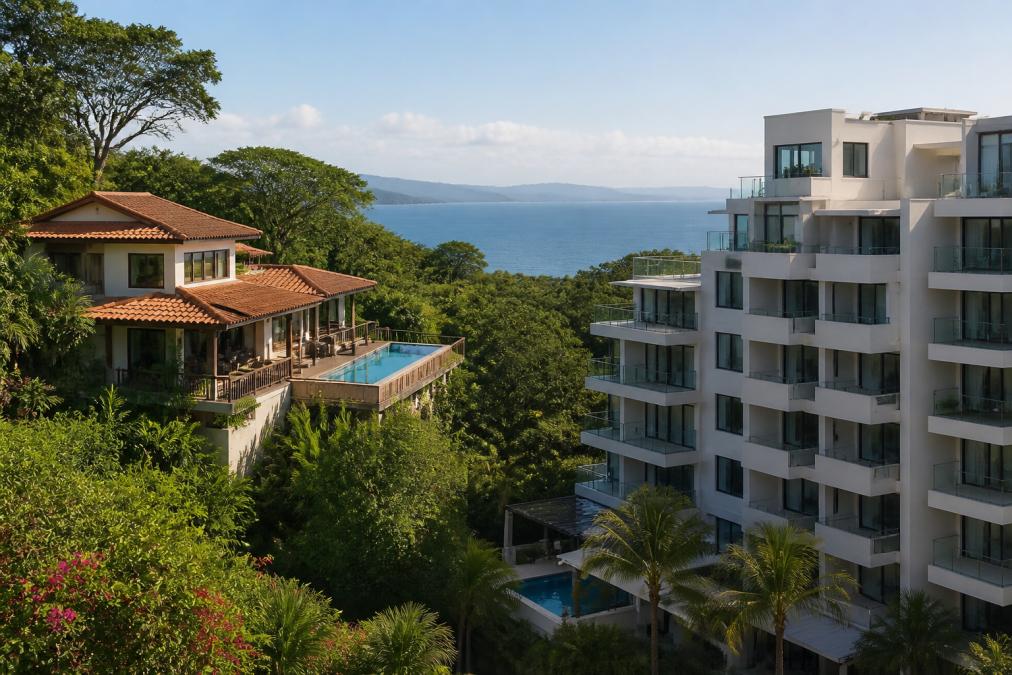
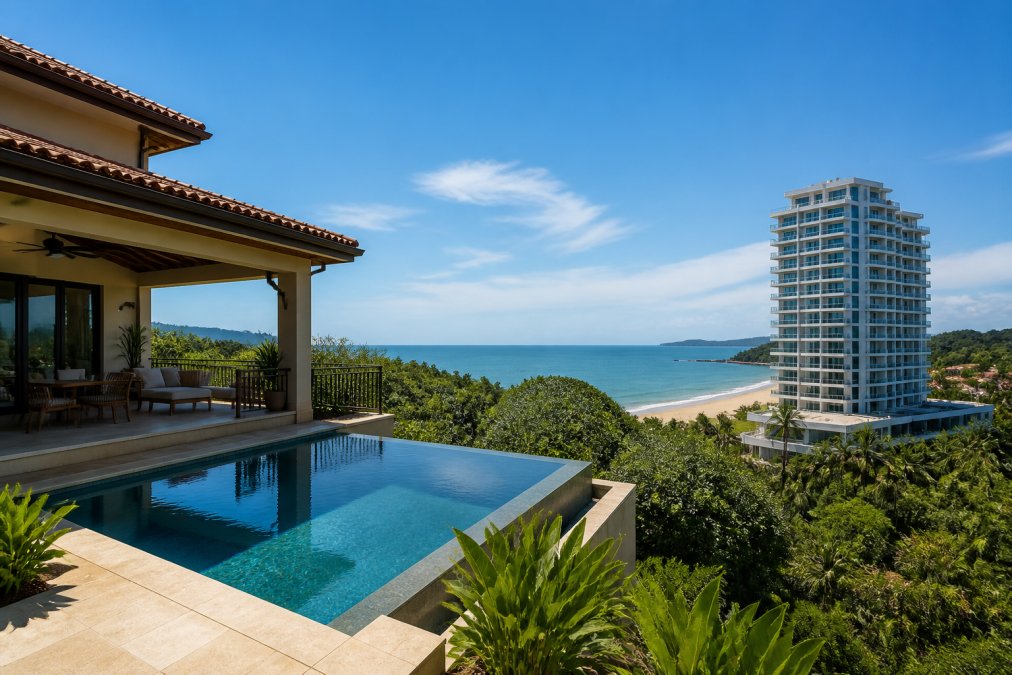
Choosing between a luxury villa and condo investment in Costa Rica comes down to one trade-off: a villa delivers higher gross rental revenue and land value, while a condo delivers lower maintenance costs and easier liquidity. At Marquis Stays Property Management, we manage high-end coastal homes across Potrero, Tamarindo, La Fortuna, and Guanacaste, and the data we see points to a clear pattern. Villas win on capital appreciation and nightly rate; condos win on occupancy consistency and exit speed. Below, we break down the ROI, fees, legal structures, and resale dynamics so you can match the asset to your strategy.
| Factor | Luxury Villa | Luxury Condo |
|---|---|---|
| Gross rental revenue | Higher nightly rate | Lower but steadier |
| Maintenance burden | Owner-managed | Shared HOA fees |
| Liquidity on resale | Slower | Faster |
| Legal structure | Fee simple | Condo regime |
| Best for | Appreciation focus | Income stability |
Costa Rica Vacation Rental Management ROI: Villas vs Condos
Costa Rica vacation rental management ROI depends less on the asset type and more on how the property is operated. A villa with a private pool can command premium nightly rates, but only if occupancy rates hold through the low season. Condos in gated communities often sustain higher occupancy because they appeal to couples and smaller groups booking short-term rentals. Professional property management matters more than the structure: revenue optimization, dynamic pricing, and direct-booking demand typically separate top-performing properties from underperforming ones. Many owners find that switching from local, informal management to a data-driven operator lifts gross rental revenue without changing the asset itself.
Cost of Maintaining a Luxury Villa in Costa Rica vs Condo Fees
The cost of maintaining a luxury villa in Costa Rica runs higher and less predictably than condo ownership, and the gap is driven less by size than by exposure.
Climate-driven maintenance: the hidden cost driver
- Salt air corrosion. Exterior metal, pool equipment, railings, gate hardware, light fixtures, AC condenser coils, degrades faster within a few kilometers of the ocean. Most practitioners find coastal villas need more frequent replacement of these components than inland properties or upper-floor condos shielded by the building.
- Humidity and mold pressure. A villa's larger interior volume, multiple entry points, and periods of vacancy between guests create conditions for mold and musty odors. Dehumidification, ventilation checks, and periodic deep cleaning are ongoing line items, not one-time fixes.
- Pool and landscaping. A private pool requires chemical balancing, pump and filter service, and resurfacing on a multi-year cycle. Tropical landscaping grows year-round and needs regular trimming, irrigation repair, and pest control.
- Roof and structure. In a villa, the roof, fascia, and exterior walls are the owner's responsibility. In a condo, they fall under the HOA and are funded collectively.
- Special assessments. A healthy-looking HOA can still levy a one-time assessment for a major repair. Review reserve levels and the age of the building before buying.
- Rental restrictions. Some condominium associations cap or prohibit short-term rentals. A restriction can eliminate your rental yield regardless of how well the property is maintained.
| Cost Category | Villa | Condo |
|---|---|---|
| Pool and landscaping | Owner | Shared HOA |
| Roof and structure | Owner | Shared HOA |
| Exterior metal / salt-air wear | Owner | Often shared or shielded |
| Security | Owner | Shared HOA |
| Predictability | Low | High |
| Special assessments | N/A | Possible |
Best Areas for Vacation Rental Investment in Costa Rica
The best areas for vacation rental investment in Costa Rica balance infrastructure, demand, and supply constraints.
Legal Structures: Fee Simple vs Condo Regime in Costa Rica
Foreign buyers in Costa Rica generally hold property through one of two structures. Fee simple grants full ownership of land and buildings, which is the standard route for villas. Condo regime divides a larger property into individually owned units with shared common areas governed by a condominium association.
Exit Strategy and Resale Value: Villa vs Condo
Liquidity: the buyer-pool math
The exit hurdles competitors skip
- Title and structure. A villa is typically held in fee simple, full ownership of land and buildings. A condo is held under the condo regime, where you own your unit plus a share of common areas governed by an association. On exit, a condo sale may require the association to confirm dues are current and that no liens or restrictions attach to the unit. A villa sale may require clean title verification on the land itself, including any easements or boundary issues. Due diligence on the buy side becomes due diligence on the sell side.
- Tax treatment on sale. Costa Rica imposes a transfer tax on real estate sales, and capital gains treatment for foreign sellers depends on how the property was held and whether the sale is structured as a share transfer or an asset transfer. The structure chosen at purchase can affect the net proceeds at exit. This is a planning issue, not a closing-table issue, owners who plan their exit at acquisition generally keep more of the gain.
Practical exit planning
Costa Rica real estate transfer and capital gains guidance
How to Choose: Decision Framework for Your Investment
- If you want maximum appreciation and can fund variable maintenance, choose a villa.
- If you want predictable income and a faster exit, choose a condo.
- If you are a remote owner, prioritize professional property management either way.
- If your target market is beach tourism, weigh villa views against condo occupancy.
- If your target market is inland, condos near amenities usually outperform.
Frequently Asked Questions
Is buying a condo in Costa Rica a good investment?
Condos can be a strong investment for buyers who prioritize low-maintenance ownership and turnkey rental potential. HOA fees cover exterior upkeep, security, and shared amenities, which simplifies remote management. However, HOA fees reduce net rental yield, and condo appreciation typically trails standalone villas in prime coastal areas. Your return depends on location, occupancy rates, and how well the property is managed. A data-driven property management team can help you evaluate whether a condo's lower entry cost and hands-off structure align with your ROI goals.
What are the primary maintenance differences between a luxury villa and a condo in Costa Rica?
A luxury villa owner is responsible for everything: roof, pool, landscaping, exterior painting, and structural repairs. In Costa Rica's humid climate, these costs add up quickly, especially for beachfront property. A condo owner pays monthly HOA fees that cover shared maintenance, but remains responsible for interior repairs. The trade-off is control versus convenience. Villas offer more privacy and space but demand a larger maintenance budget and a reliable local team. Condos shift most exterior upkeep to the HOA, making them easier to own from abroad.
How do HOA fees impact the ROI of Costa Rican vacation properties?
HOA fees directly reduce your gross rental revenue, so they must be factored into any ROI calculation. In a condo, fees might cover security, pool maintenance, and common-area landscaping, but they can be substantial. A villa typically has no HOA fee, but you will pay separately for the same services, often at a higher total cost because you are not sharing expenses. The key is to compare net income after all ownership costs. A property management company can provide a side-by-side analysis based on real expense data for your specific property type and location.
Are luxury villas in Guanacaste better for long-term appreciation than condos?
Villas often appreciate faster in Guanacaste's prime coastal markets because land is scarce and demand for private, spacious properties remains strong among high-net-worth buyers. Condos tend to have more inventory and compete on price, which can limit appreciation. However, condos in gated communities with strong rental programs can still deliver solid returns. Appreciation depends on location, infrastructure improvements, and market timing. Before deciding, review recent sales data for comparable properties and consider how each asset class fits your long-term hold strategy.
What are the operational challenges of managing a standalone villa vs. a managed condo complex?
A standalone villa requires you to coordinate every service independently: housekeeping, pool care, gardening, security, and emergency repairs. If you live abroad, this means relying on a property management team that can respond quickly. A condo complex often has on-site administration and shared services, which reduces your coordination burden. However, you still need someone to handle guest communication, check-ins, and interior maintenance. For remote owners, a full-service management company like Marquis Stays can handle both scenarios, but villas typically demand more proactive oversight.
The hardest part of owning luxury Costa Rican real estate from abroad is not buying it, it is running it well enough to protect the asset and grow returns. Marquis Stays Property Management combines data-driven revenue optimization, full-service management for remote owners, and five-star hospitality to keep your property visible, maintained, and profitable. Get started with Marquis Stays Property Management and turn your villa or condo into a dependable income stream.